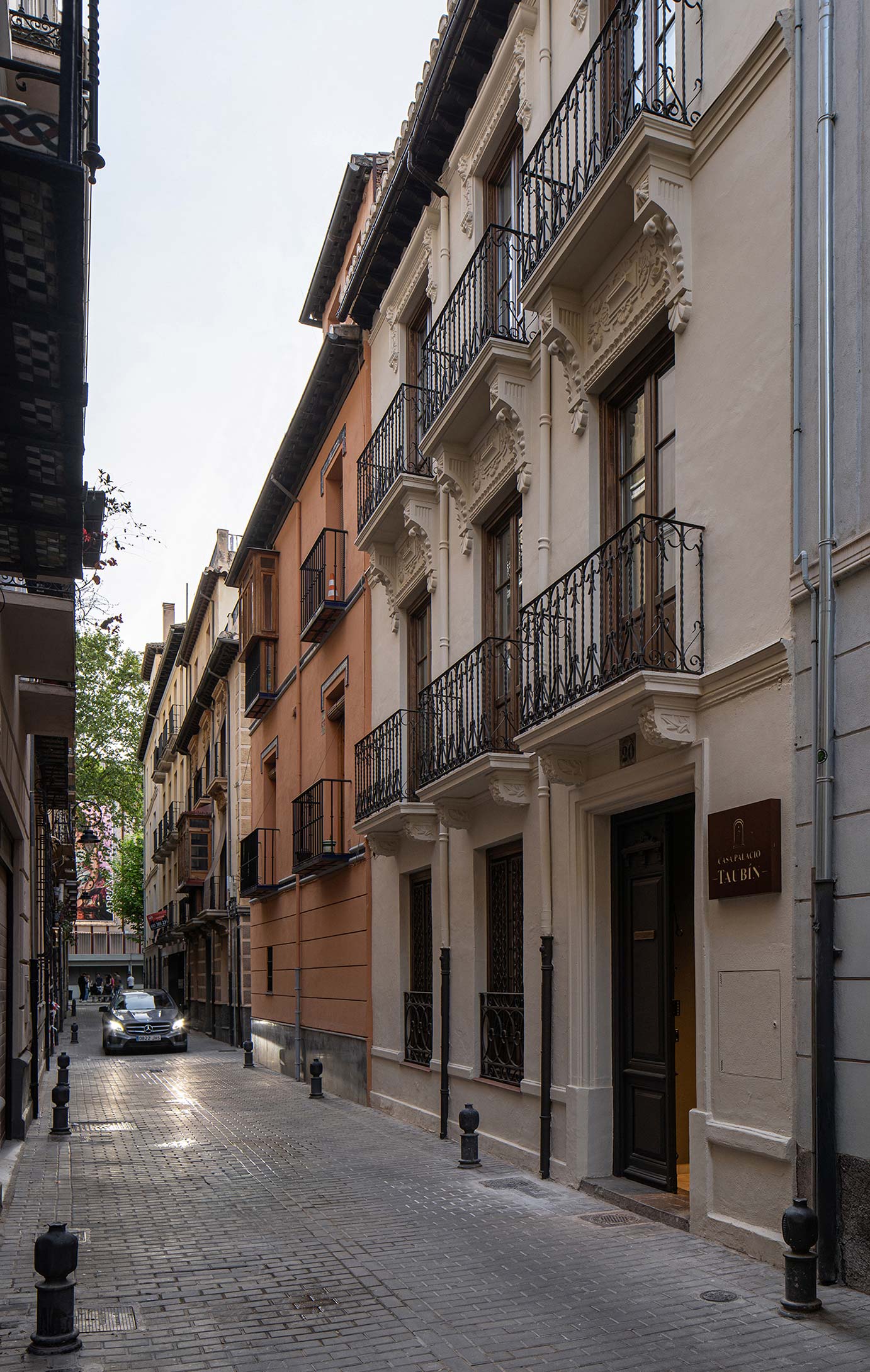
This boutique hostel is located in a protected late 19th-century building in the historic area of Puerta Real and La Virgen. Close to the boulevards of Granada’s 19th-century expansion, the project offers a quiet place to stay, set apart from the more intense rhythm of the city’s tourist streets.
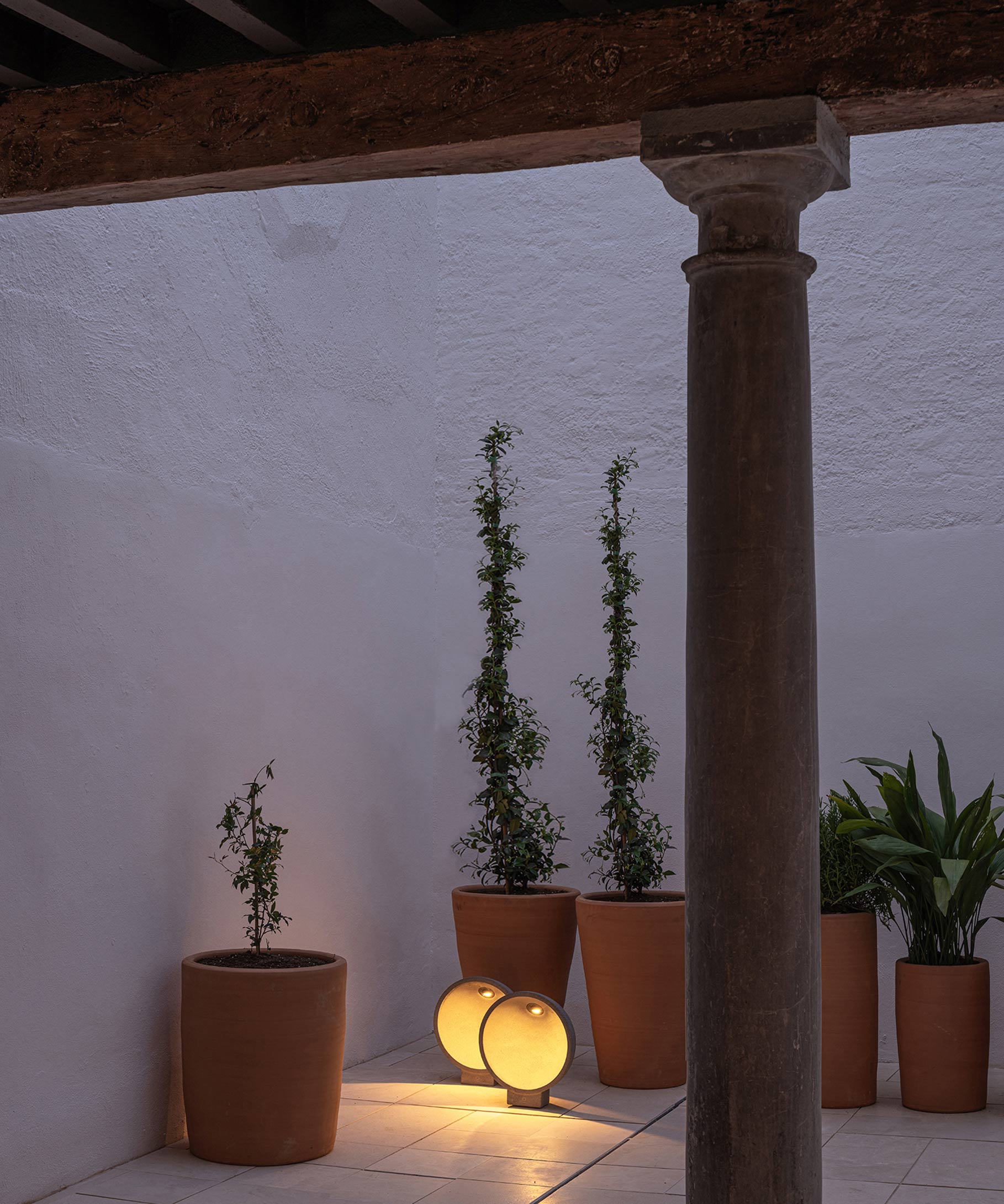
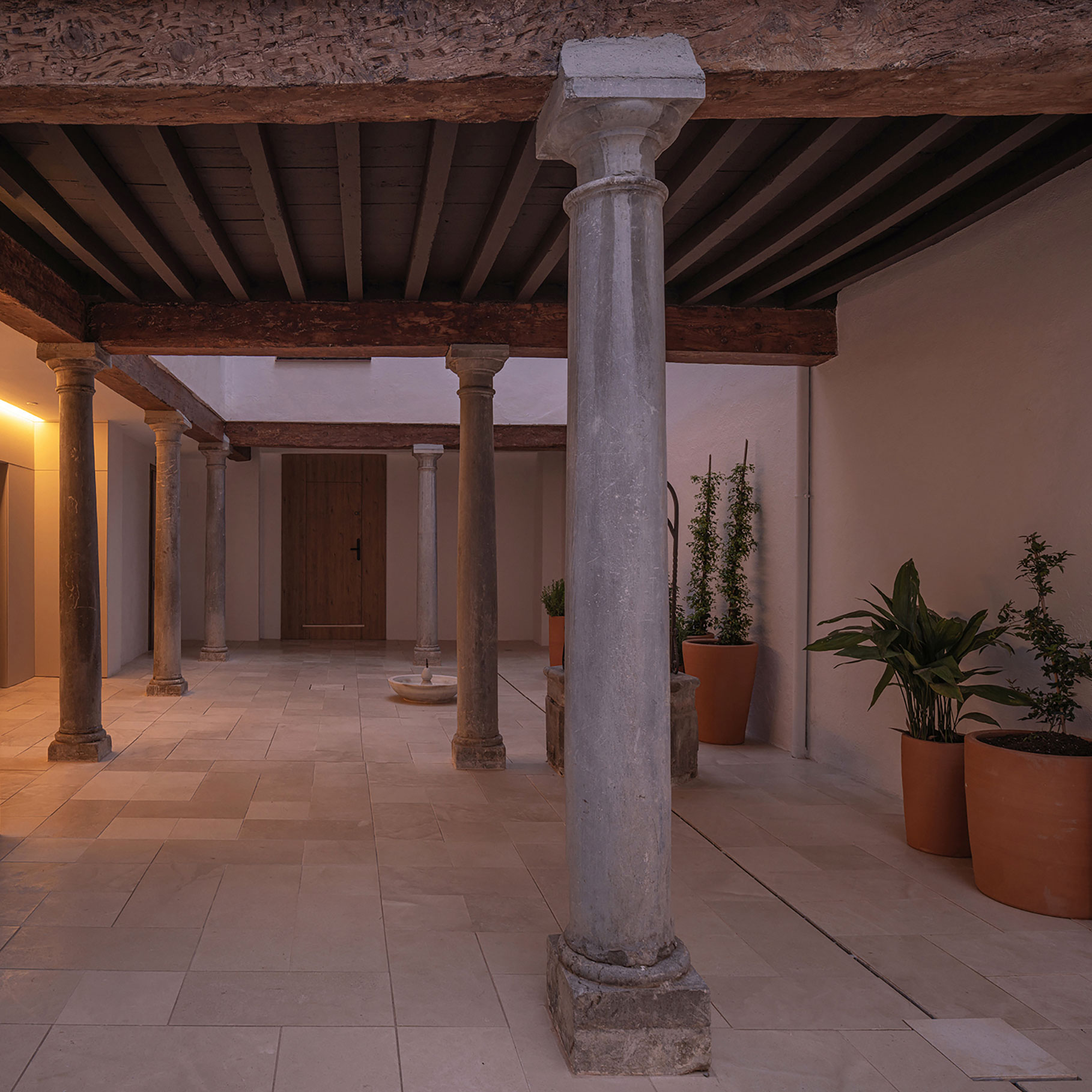
The intervention works from the original structure of the building: ground floor, two upper floors and a tower, organised around a sequence of patios that preserves its domestic character. Access is through the traditional entrance hall, which leads into the patio, understood as the heart of collective life. In this space, elements of Granada’s architectural tradition are recovered and emphasised: the well with its Sierra Elvira stone surround, the ironwork supports, the columns, the fountain and the presence of wood. The patio floor is finished in Cabra limestone, laid in an irregular grid that brings texture and movement without overloading the space.
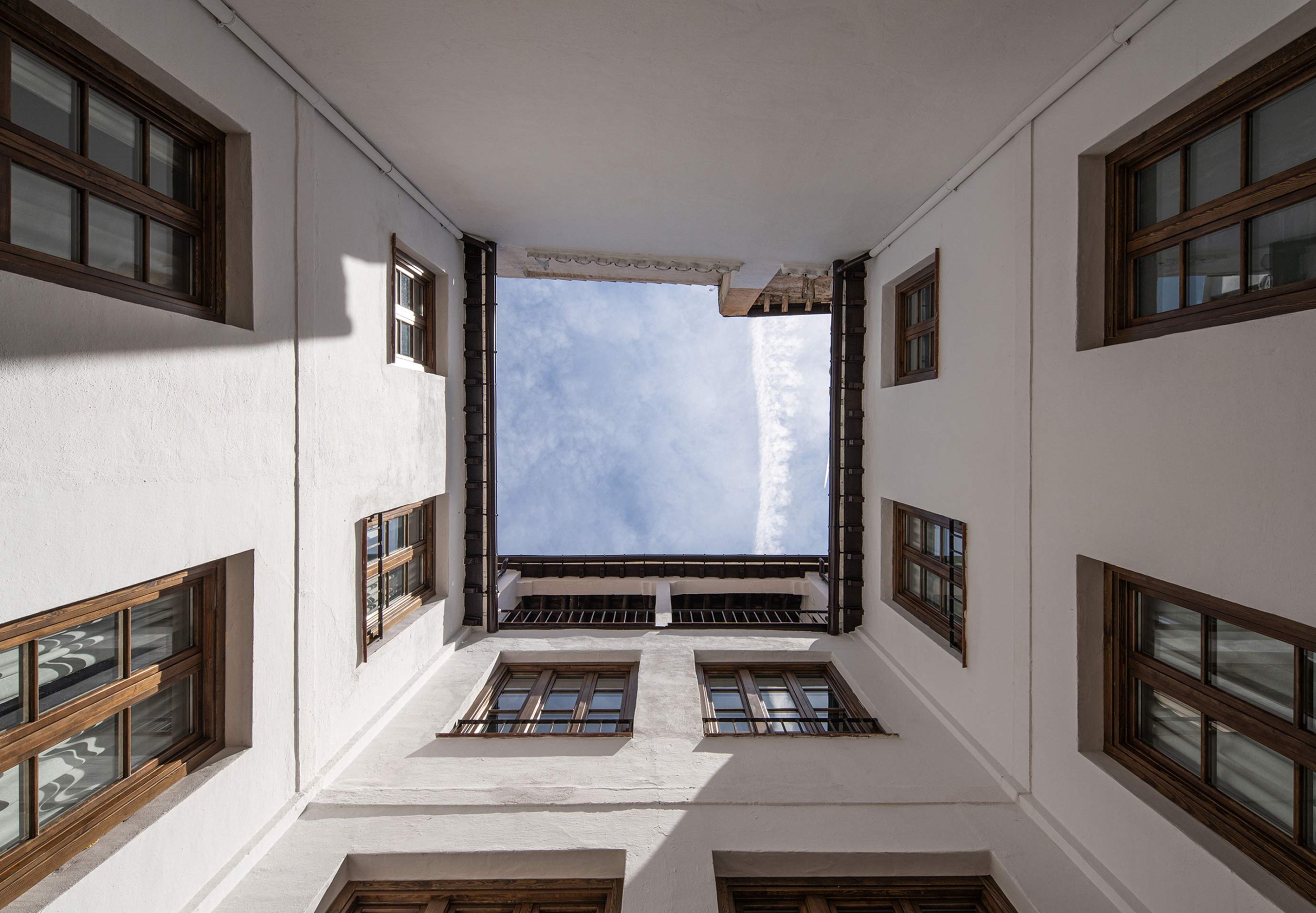
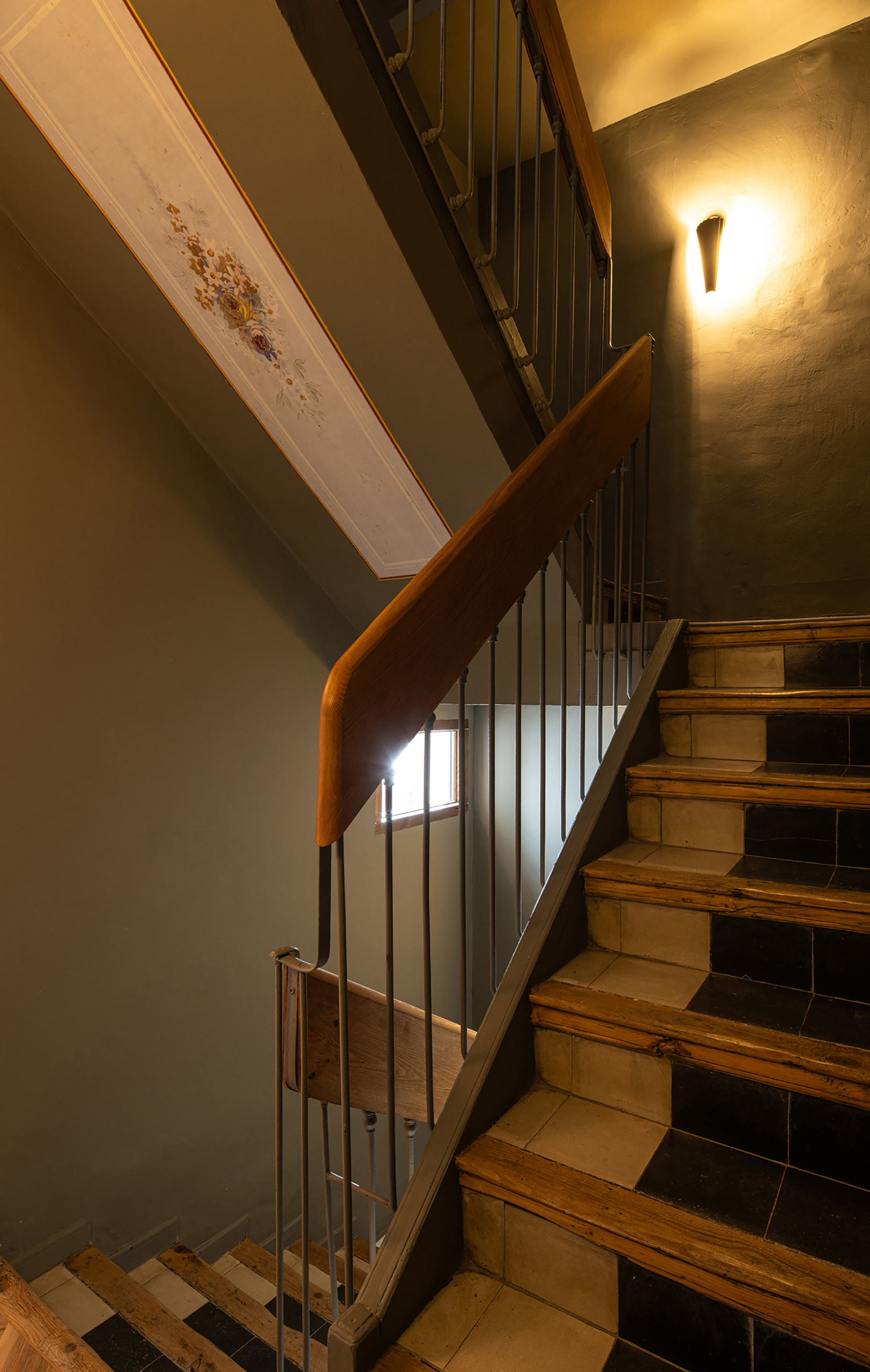
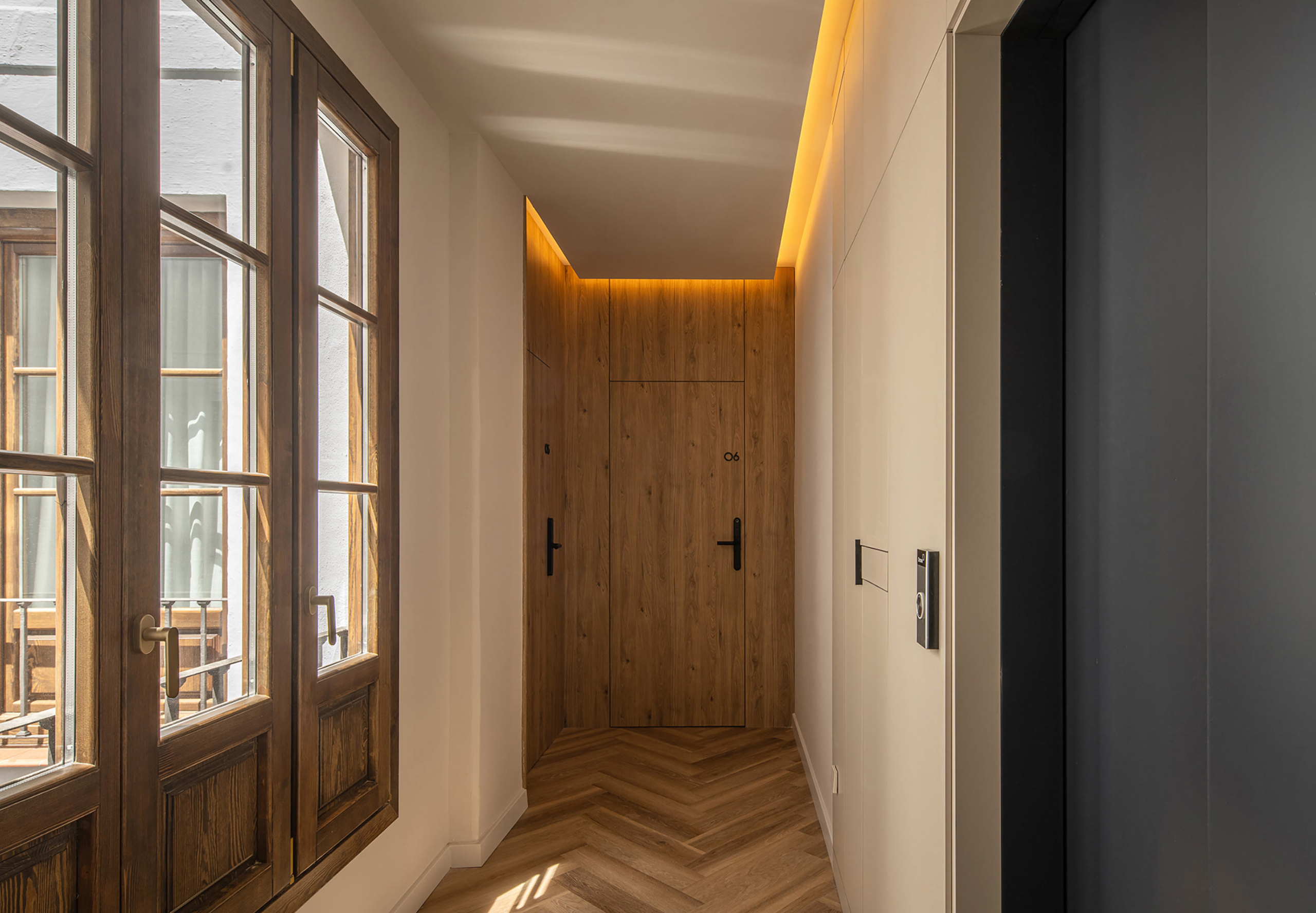
The new lift is incorporated from the patio, providing vertical accessibility without altering the main reading of the building. On the upper floors, the front and rear patios organise circulation and maintain the relationship between light, shadow and depth that is characteristic of local architecture. The intervention respects the composition of openings in the protected façade and replaces the exterior joinery with new timber elements. In the common areas, warm wood acts as the main wall finish, reinforcing the original hierarchy of the spaces. The staircase, aligned with the entrance hall, is painted in dark grey to introduce contrast and a certain scenic intensity into the route.
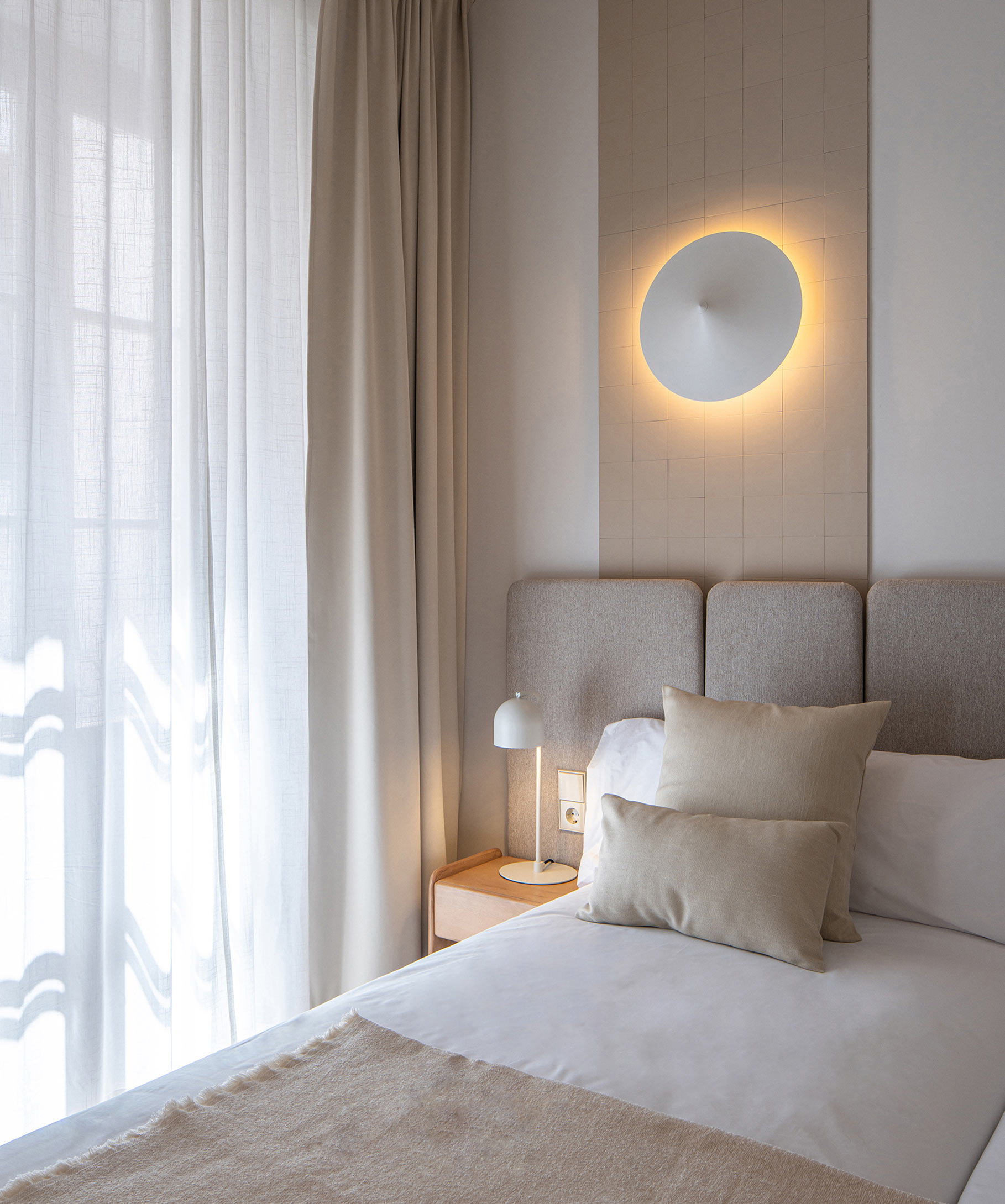
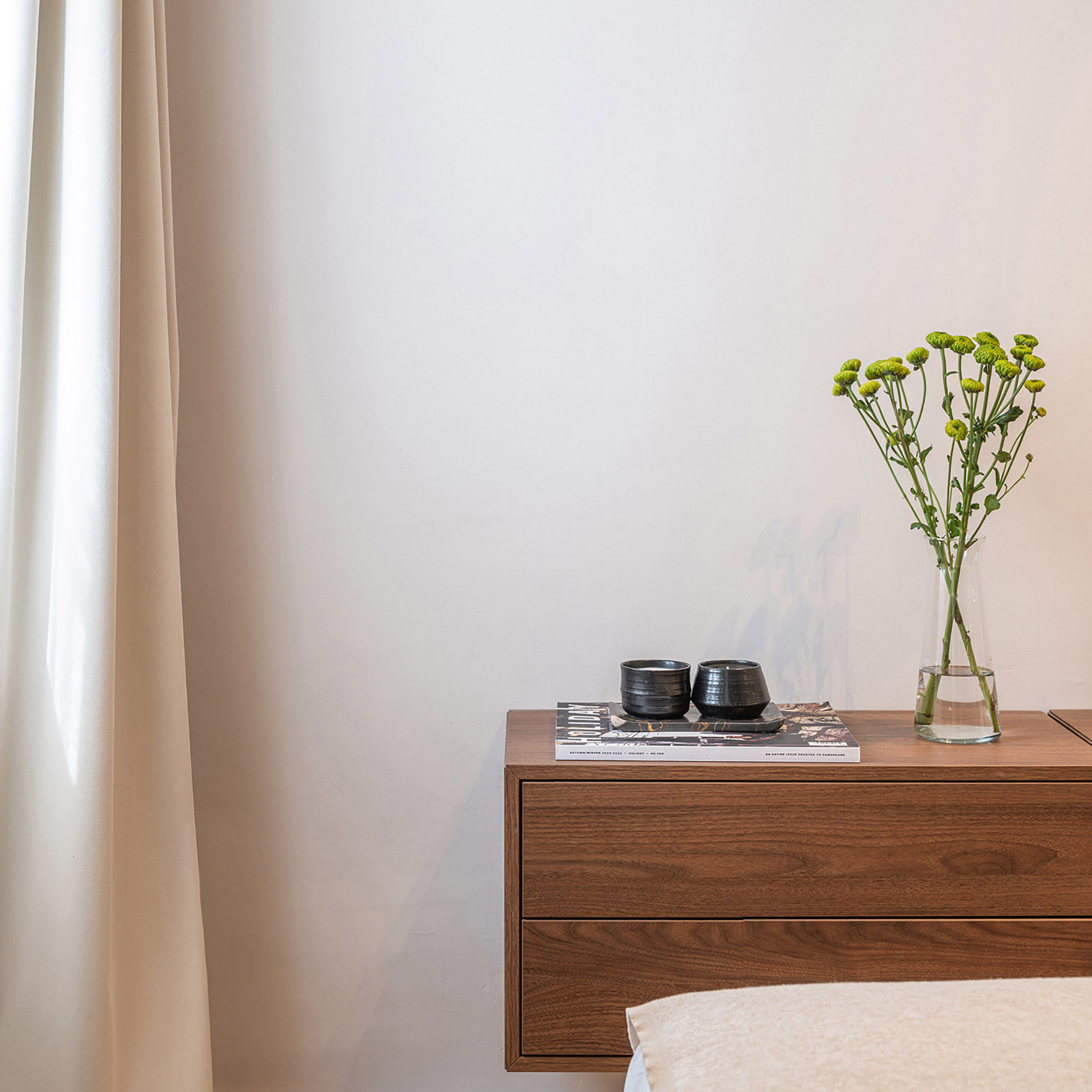
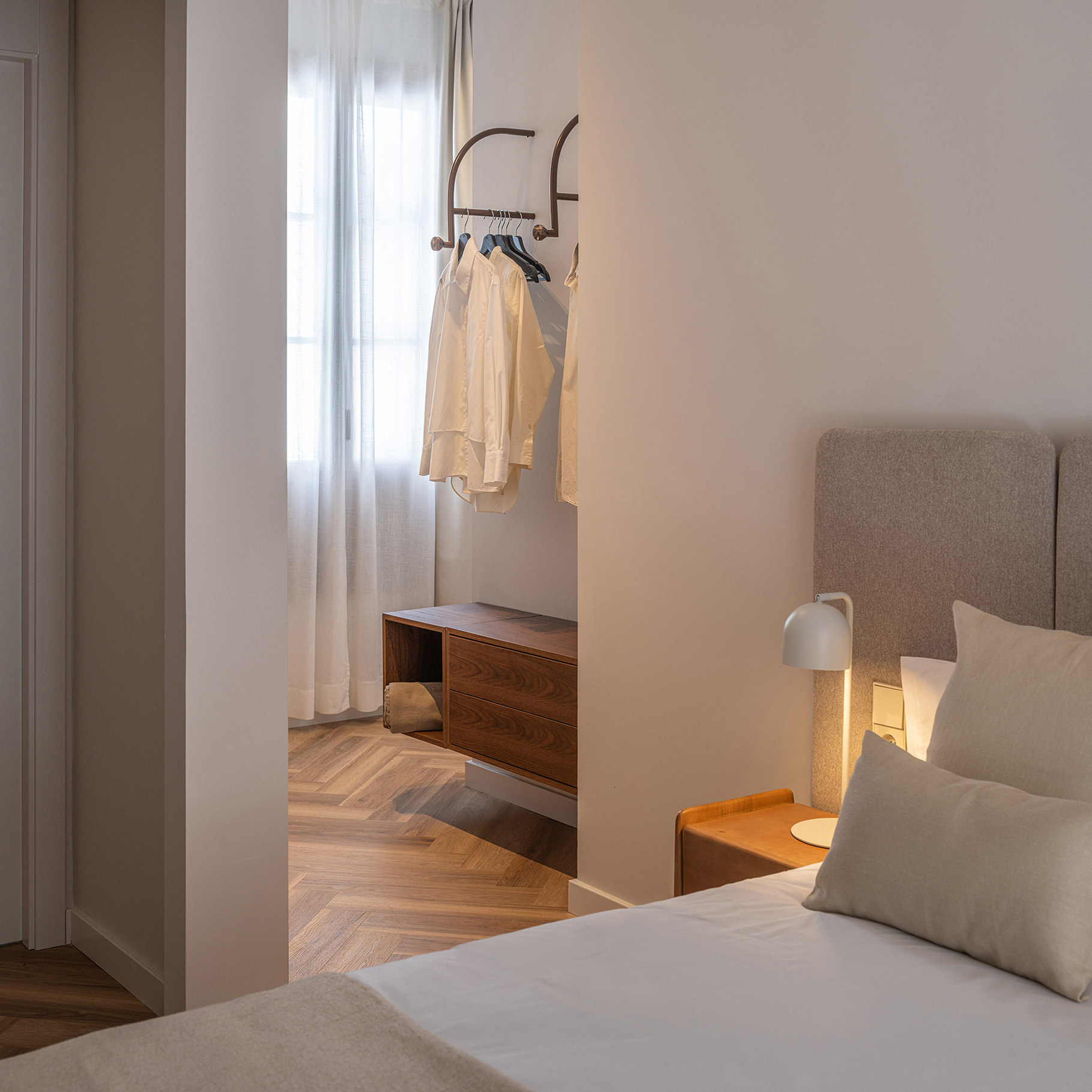
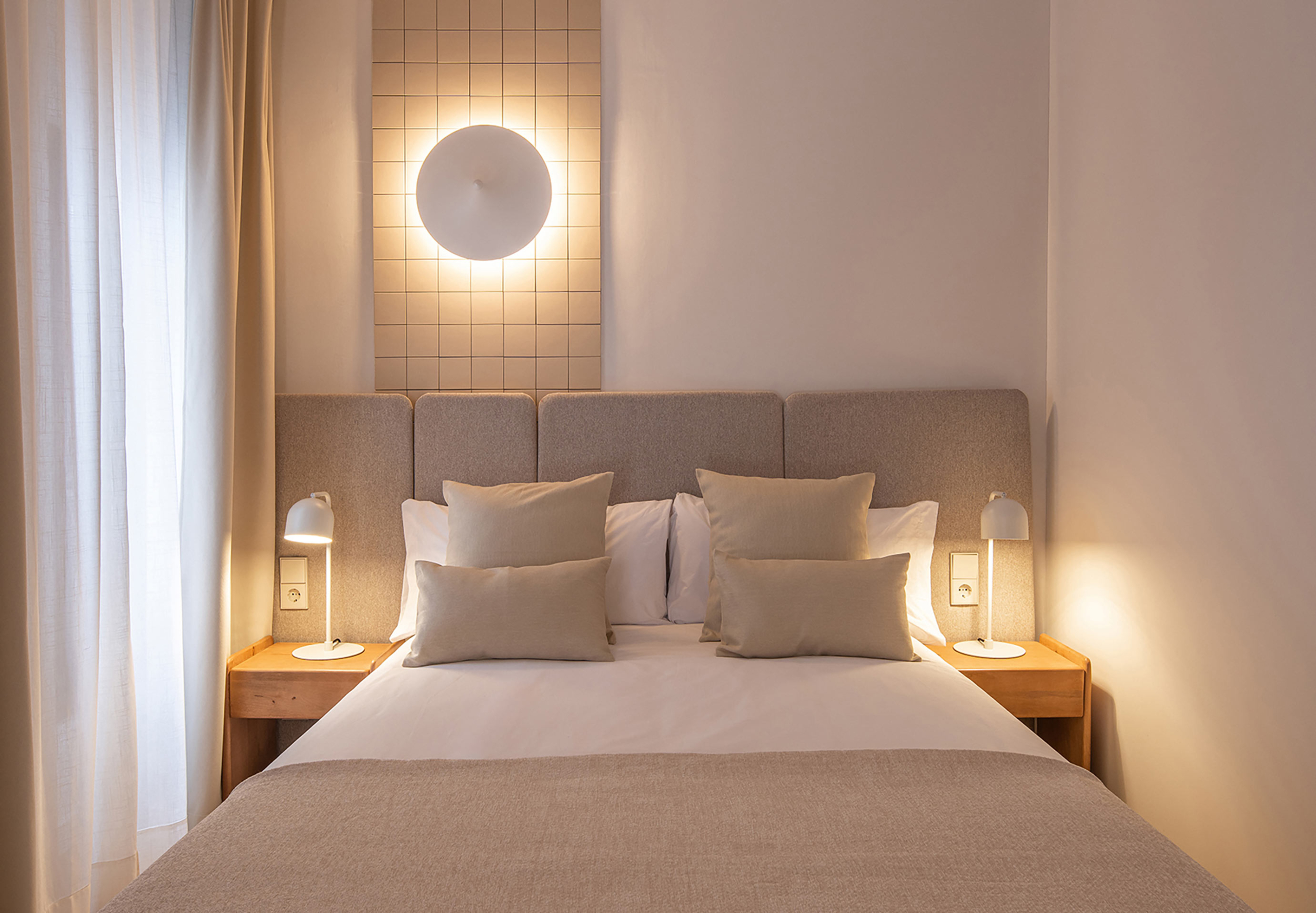
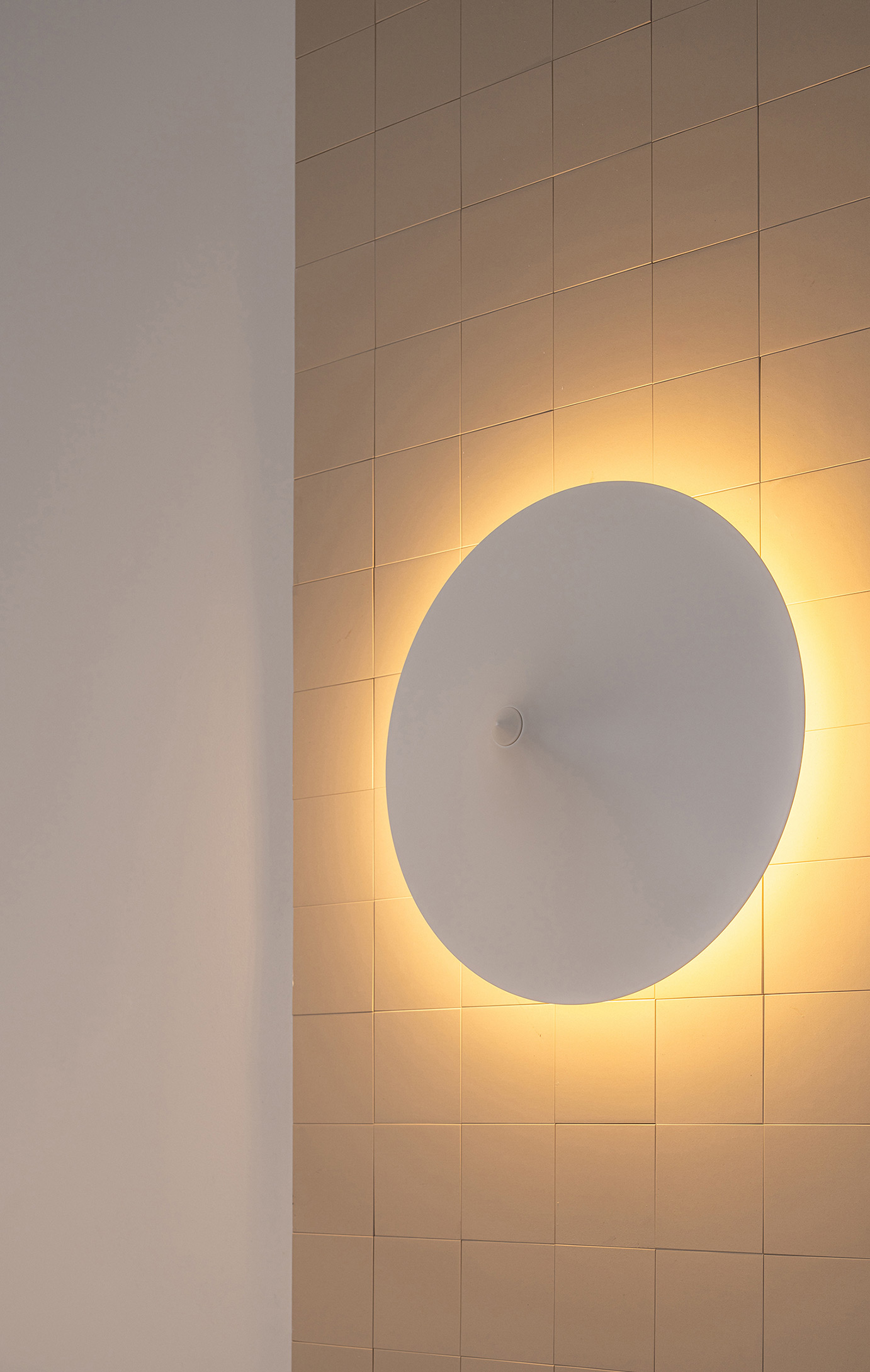
In the rooms, the architectural language becomes more restrained. The aim is to create a calm atmosphere through a limited palette of materials, neutral tones and precise solutions. Natural ceramic tile panels frame the lighting and act as subtle material accents, bringing identity without disrupting the overall sense of serenity.
The result is an intervention that does not compete with the existing fabric, but works from its values: the sequence of patios, the Sierra Elvira stone columns, the ironwork, the wood and a way of inhabiting linked to Granada’s domestic tradition.